
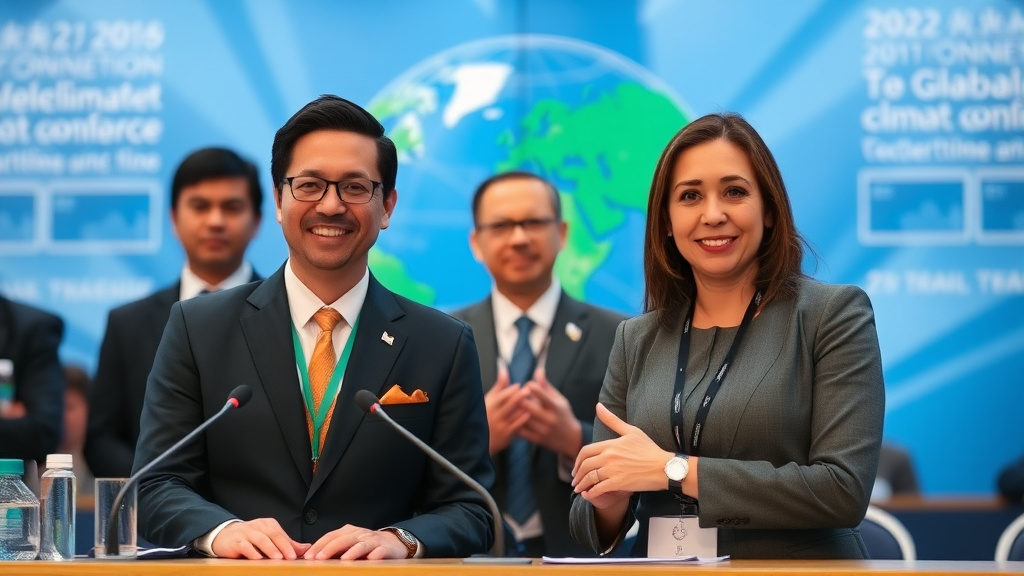
As severe climate events intensify and planetary temperatures persistently increase, global officials assemble for the latest climate summit to address an historic environmental challenge. This essential summit assembles nations committed to creating enforceable accords on carbon pollution, sustainable energy transformations, and climate adaptation strategies. The consequences are more significant than ever as representatives discuss frameworks that will shape our Earth’s destiny. Learn about global partnership and ambitious pledges are revolutionizing international action to environmental warming.
Climate Crisis Reaches A Crucial Turning Point
Scientific evidence clearly shows that our planet has reached a critical juncture in its climate trajectory. Global temperatures have climbed about 1.1 degrees Celsius since pre-industrial times, producing cascading environmental consequences across all ecosystems. Melting ice caps, rising sea levels, and increasingly severe weather patterns serve as stark reminders of the urgency surrounding climate action. The latest climate summit acknowledges these concerning developments and underscores the importance of immediate, decisive intervention to stop lasting destruction to our planet’s fragile equilibrium.
The intersection of environmental degradation and economic and social challenges has produced an extraordinary challenge requiring coordinated global response. Less developed countries confront outsized effects from climatic shifts while having minimal contribution to historical emissions, emphasizing the requirement for just burden allocation across countries. The conference confronts these intricate problems by setting up frameworks for technology transfer, climate finance, and sustainable development initiatives. World leaders accept that lacking fundamental change in this vital timeframe, humanity stands to crossing irreversible thresholds that could profoundly transform civilization’s trajectory and survival prospects.
Global Partnership and Policy Framework
The global climate conference marks a pivotal moment for creating unified international policies that transcend national boundaries. Participating nations acknowledge that climate change requires joint efforts, compelling countries to synchronize their sustainability benchmarks and emission reduction targets. Delegates are negotiating comprehensive frameworks that establish oversight systems, guaranteeing each nation fulfills its commitments. These collaborative efforts seek to establish binding commitments that drive substantial advancement toward worldwide climate stability and sustainable development goals.
Strong policy frameworks developed at the summit stress mutual obligation while respecting diverse economic circumstances across nations. The agreements being forged include provisions for monetary assistance to nations in development, technology transfer initiatives, and capacity-building programs. By setting measurable targets and oversight frameworks, the international community enhances its capacity to monitor development and adjust approaches as needed. This comprehensive approach acknowledges that addressing the climate crisis requires both immediate action and long-term institutional commitment from all participating nations.
Strategies and Forward-Looking Obligations
Clean Energy Conversion
The summit has driven unprecedented commitments to renewable energy expansion across participating nations. Countries pledged to increase solar, wind, and hydroelectric capacity by 50% within the next decade, substantially reshaping global energy infrastructure. These investments represent a collective effort to cut CO2 levels while building green economic prospects. Developed nations committed substantial financial resources to help developing countries in their transformation, acknowledging that global climate action necessitates balanced collaboration and shared responsibility for environmental renewal.
Carbon Reduction Targets and Accountability
Delegates set binding carbon reduction targets requiring nations to attain carbon neutrality by 2050, with intermediate milestones in 2030 and 2040. An autonomous oversight system will track progress openly, ensuring accountability across all signatory nations. These legally enforceable commitments constitute the most comprehensive environmental accord to date, with consequences for failure and rewards for surpassing targets. The framework incorporates provisions for knowledge sharing and financial support, permitting emerging economies to fulfill their commitments while maintaining economic growth and social development.
Creating Resilience and Adaptability
Beyond emissions reduction, the summit highlighted climate adaptation strategies for vulnerable populations and ecosystems confronting urgent challenges. Funding mechanisms were established to support seaside regions, farming areas, and island nations dealing with elevated ocean levels and shifting climate conditions. Investment in green infrastructure, ecosystem restoration, and climate-resilient agriculture will protect livelihoods while reducing future climate-related damage. This comprehensive approach recognizes that addressing climate change requires coordinated efforts on both mitigation and adaptation, ensuring no communities are left behind in our shared shift toward ecological sustainability.
